


Suspensions are a system. Here’s how it works
When you modify the suspensions of a four-wheel vehicle to fix any problems, you need to realise that “suspension” means a system consisting of several parts: the genuine, suspension element, which bears, or, better yet, suspends the weight of the vehicle, and the shock absorbing element, which brakes the wave motion, maintaining the grip on the road.
The suspension element consists of springs of various kinds: leaf springs of flat steel, helical springs of round steel, torsion bars, or air springs. Each one has its pros and cons.
Generally, for high-range vehicles, pneumatic suspensions are used, for off-road vehicles helical springs, and for vans, pick-ups, and commercial vehicles up to 3.5 tonnes leaf springs. Industrial vehicles with a load of more than 3.5 tonnes are mainly equipped with leaf springs on the front axle and air springs on the other axles. Torsion bars have fallen out of use for technical reasons and their high cost.
Leaf springs
Adopted as early as the 19th century to ease the discomfort of carriage journeys, leaf springs are divided into two big categories based on the type of production material: traditional, semi-elliptical steel or parabolic steel. The first has a uniform thickness, while the second is thin at the ends and thicker at the centre.
Leaf springs made of parabolic steel consist of a smaller number of leaves, even just one. Parabolic steel leaves cannot be replaced nor paired with semi-elliptical ones. In case of repairs, you respect the original.
Air springs
Air springs, which use a rubber membrane, were conceived for industrial vehicles and gradually started to replace traditional springs on some cars and off-road vehicles.
Lighter than others, they bear loads well and keep the vehicle's attitude consistent.
We mainly install them on commercial vehicles up to 3.5 tonnes.
Sometimes customers request that we vary the height of their vehicle for particular needs, like an excessive load for short periods, or due to the presence of loading bays. These kits have a pneumatic compressor or simple air connections and pressure gauges, to check the pressure and vary it according to specific needs.
Helical springs
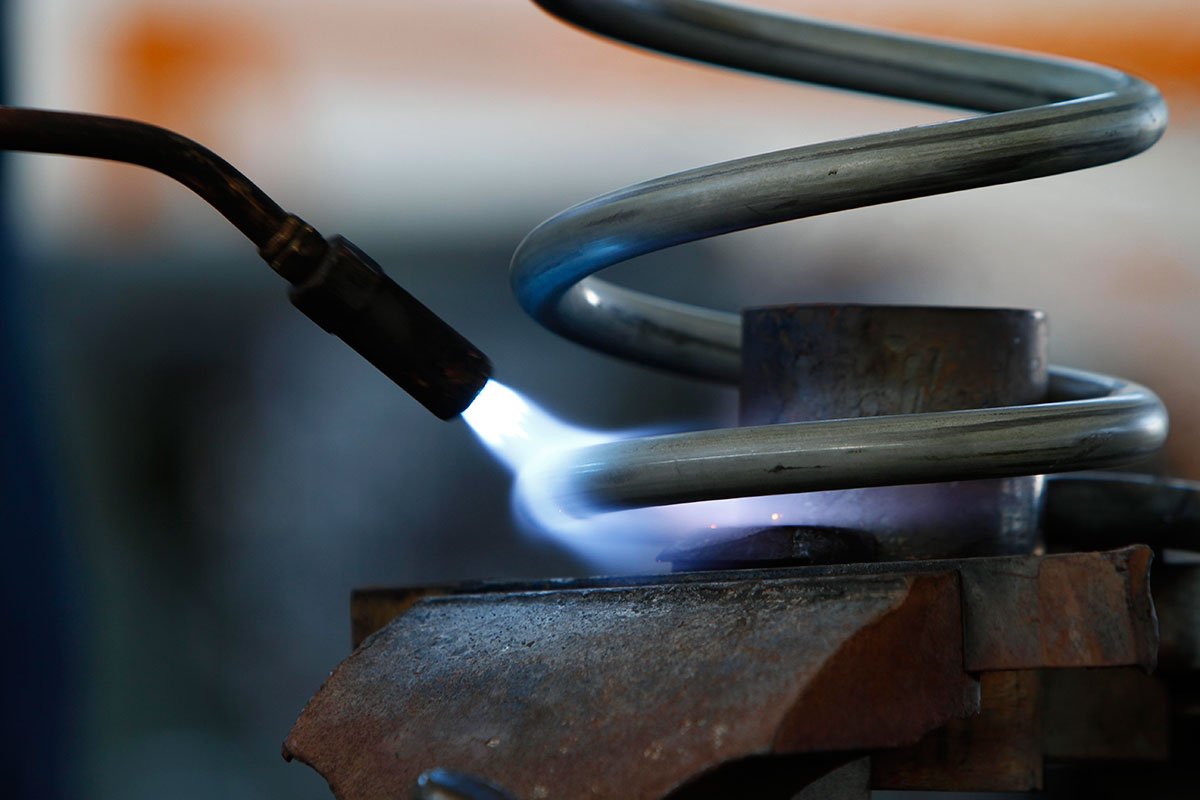
Helical springs are the most widespread on vehicles. They consist of a steel wire wound around a spindle with a defined diameter. In our spring factory we process metallic wires from 4 to 30 mm in diameter. The length of the suspension element varies based on the desired capacity.
Deburring, milling, cropping, and pressing finish the spring based on the specific design.
At BSA, we construct helical springs with larger dimensions than the original design, using high-quality steel. The result is an excellent artisanal product, which is made-to-measure. The whole process, from hardening to painting, is carefully followed and controlled by very expert technicians, to guarantee the customer a truly reliable product.


Call us on (+39) 011 9492705
We’re open from Monday to Friday 8:00 – 12:00 and 14:00 – 18:00.

If cars, engines, and how they work make your heart beat faster, send your CV to job@bsasospensioni.it

Hear what our customers have to say about us